Archive | Photos RSS feed for this section

Parcevall Hall and Gardens

Parecvall Hall lies on a steep hillside near Appletreewick in the Yorkshire Dales National Park. Built in 1582 as a farm house it is now a retreat leased to the Diocese of Bradford by the Shrine of Our Lady of Walsingham. Extensively refurbished by Sir William Milner who bought the Parcevall Hall estate in 1927 he bequeathed the estate to the College of Guardians of the Shrine in 1960. Sir William was an architect and founder member and honorary director of the Northern Horticultural Society where he pioneered the establishment of Harlow Carr gardens, at Harrogate.

Not surprising with Sir Williams background and passion for plants that the grounds today are a wonderful Gardens for the public to visit. 24 acres of formal and woodland gardens command impressive views of Simon’s Seat and Wharfedale. These features and the many planted trees  create a microclimate that helps special plants to survive and thrive 800 feet above sea level. The view of the herbaceous border as you approach the house is flanked by two orchards of fruit trees containing some special Yorkshire apple varieties. All the hedges are neat and well maintained a tribute to the current head gardener and his helpers.
The Alpine garden at the rear of the house houses acid loving and limestone loving plants in close harmony due to the rocky out crops in this part of the Skyreholme valley. I also noted that the numerous Hostas had not suffered any slug damage and the gardener put it down to the birds having a good feed.

They were not the only ones having a good feed. In addition to the bees above, the cafe down by the car park was doing a roaring trade.

Despite the  ‘liquid sunshine’  during my visit these Helenium made up for any negative feelings and the whole trip was tranquil, educational and positive.  If you are invited on a retreat then it will undoubtedly be an experience. If you enjoy walking there are many places to visit close by including Trollers Gill, Stump Cross caves and Simons Seat. However for just an afternoon garden visit I can recommend the Parcevall Hall Gardens between May and August.

Comments { 1 }

Packhorse Bridges

Built like a Packhorse bridge over the Leeds Liverpool canal this bridge has the traditional narrow, one horse wide masonry arch and low parapets so as not to interfere with the horse’s panniers. It is at the junction of the now defunct Bradford Canal and was opened in 1774. The canal and the bridge carried industrial revolution products too and from Bradford. Despite many problems with the water flow into the canal it was a commercial asset until it closed in 1922 due to the high cost of pumping water back to the head of the canal.

Pleasure craft now float under this fine old bridge heading towards Shipley.

The Roman fort of Olicana now known as Ilkley, once guarded this strategic crossing of the Wharfe, on the legion’s road to Boroughbridge (Aldborough). This packhorse bridge was built in 1674 close to the Roman built ford across the river Wharfe. It is an unusual bridge as it is wider than many packhorse bridges and would allow two loaded pack animals to pass on the bridge. It is closed to traffic but you can wheel a cycle across.

Packhorse bridges were generally built on the trade routes that formed major arteries across Great Britain and there are many more examples to look out for in Yorkshire.

Comments { 0 }

Yorkshire Open Artists Show

aaa
Artists based in Yorkshire can enter an Open Exhibition at Leeds Art Gallery by submitting works for consideration on the afternoons of 11th-14th July 2009.
The ‘selling’ exhibition then runs from 26th July – 31st August with a 30% commission  payable to the Leeds Art Gallery for any works sold. The variety of exhibited work attracts a large and varied audience and is worth a visit on its own.

Artists must be over 18 and be resident in Yorkshire but the submitted work can be from virtually any media. Sculpture, painting, drawing, prints, photographs or new media including DVD or video are all welcome. If you are interested pick up an entry form at the library. If you are unsure just turn up as a visitor to view what everyone else has submitted then get planning  for next years event.

Golden Hall by B Pettinger 2004

Continue Reading →

Comments { 0 }

York Pictures

York Minster Flowers and a Church

York Minster Flowers and a Church

York

York

York from inside the Friends Meeting House Garden on Friargate.

Continue Reading →

Comments { 0 }

Classic Cars in Thirsk

thirsk-cars

These vehicles were parked in a garden in Thirsk some months ago and I hope they are now on their way to restoration. It is an expensive and time consuming hobby to restore a vehicle but I, like others, stop and stare at old cars on the road and it is great to see them loved and cared for. Keep up the good work in protecting our engineering heritage.

Our Yorkshire based badminton club’s annual trip in June took in the Daimler and Classic Car show at Ross on Wye ( Wye oh why did we leave Yorkshire I hear you ask). A similar garden was spotted along with some immaculate cars.

ross-garden

Continue Reading →

Comments { 0 }

Danger from Cows in Field

cows

This shot of Yorkshire cows is taken in the Wharfe Valley between Grassington and Burnsall. Generally speaking cows are placid animals who will happily co-exist with humans. However, there are occasions when cows and bulls can present a danger to walkers and ramblers. For anyone who enjoys walking in the countryside it is important to be aware of these potential problems.

cows

When Cows Are Potentially Dangerous to Walkers

Firstly, cows do not look upon humans as a threat. However, they may see dogs as a threat, it harks back to the time when wolfs would attack cows and their calves. Therefore, it is a walker with a dog who is most under threat.
Secondly, the most dangerous time is after new calves are born and the cows feel protective towards their young.

If they see a walker with a dog approaching they may become defensive and attack the person with the dog.

If this was ever to happen, the most important thing is to let go of the dog. Your dog will easily be able to run faster than cows. If the dog runs away from you, the cows will lose interest in you. THe only danger comes when the walker won’t let go of their dogs and so gives the cows a reason to attack. Unfortunately, on very rare occasions tragic incidents of cows trampling over people can occur. However, if you take care to follow basic principles there is no need to fear cows in field

Comments { 0 }

Frank Meadows Sutcliffe at Whitby

Rigg Mill, Whitby

You do not need any special reason to visit Whitby but if by chance you have overlooked the Whitby Museum then you are missing a trick. It is located at the Whitby Literary and Philosophical Society where the famous photographer Frank Meadows Sutcliffe was curator. Sutcliffe was born at Headingley, Leeds in 1853 but set up his own professional studio in a disused jet workshop at Waterloo Yard, Whitby in 1875. Photography in Victorian times was not easy to master and people were often content to produce an acceptable image which was sharp and well exposed but there were a handful of photographers who wanted to lift their pictures into the heady realms of ‘Art’.
Frank Meadow Sutcliffe was one of these artists! His sepia toned pictures are world renown recording incidents and images from a bygone era, his most famous photograph was taken in 1886. Water Rats caused much comment at the time as it featured naked children but the image is not erotic and even the Prince of Wales is believed to own a copy. Sutcliffe was using the conventions of the academic nude to show how photography can approach art. However it is said that his local clergy excommunicated him for displaying his Water Rats.

Woman with...

Some of the strongest images are of what was work-a day life in Victorian times like this picture above of ‘The Fisher women Shop’. His fishermen pictures show such detail they repay lengthy study and he also produced farming and landscape pictures around Whitby Sandsend and Staithes of artistic merit.

Sandsend Beck

Frank Meadows Sutcliffe became World famous as a great photographer winning over 60 gold, silver and bronze medals from exhibitions all over the world. He is buried in Aislaby churchyard, north of Whitby .

When you next visit Whitby, and I hope it is soon, take a look at the many pictures that are available from the Sutcliffe Gallery, Flowergate, Whitby.

Photo credits
Rigg Mill, Whitby by Preus museum
Sutcliffe, Frank Meadow
Mølle ved en foss. Whitby, England, 1900
17,7 x 22,8 cm
Sandsend Beck and NMFF.000448 by Preus museum
CC BY 2.0

NMFF.000448

Comments { 0 }

Morris Dancing in Yorkshire

Otley folk 020

What are the following or what do they have in common?  Lizzie Dripping, Yorkshire Chandelier, Gift Rapper, Slubbin Billy’s, T’Gradely Lasses, Rhubarb Tarts, Goatland Ploughstots, Betty Lupton’s Ladle Laikers , Flag Crackers of Craven, Kitchen Taps, Inclognito, Lord Conyers Morris Men and I could go on with lots more. From Rotherham, Green Ginger, Richmond and Otley there is a local Folk Dance troupe ‘or side’ near you. For a full list and contact points you could do worse than start with Yorkshire Folk Arts. Patrons are two female folk legends Norma Waterson and Kate Rusby.

The Dances

Folk dance including Maypole dancing and Clog dancing take many forms and if you want to be amazed at the variety try ‘The Day of Dance’ at Saltaire on May 9th 2009. Below are some notes on a couple of dance routines popular in Yorkshire. Yes I said popular, it is not just a minority participation activity it draws the crowds when Ale and dancing come together at festivals.

The Long Sword Dance of Yorkshire and the rapper sword tradition was traditionally performed in the mining villages. The dance involves five people (often accompanied by two Tommy and Betty characters) connected by short two-handled flexible swords, called rappers, forming an unbroken chain. There are many variations of this dance creating different patterns with the swords. 16 colleges run folk dance courses in Yorkshire And Humberside as well as numerous private clubs.

Otley folk 012

The Morris goes back to ancient pagan rituals which were held in the Spring to ensure fertility and virility if not desirability or ‘prodigious proliferation of crops, livestock and the local populace’. By the end of the nineteenth century morris dancing was almost extinct due to the decline of the rural communities. The fact that a few Morris traditions have survived is due to a chance encounter between Cecil J. Sharp and the Headington Quarry Morris side on Boxing day, 1899. Sharp, already a noted folk song enthusiast was inspired to create a record of many of the remaining dances from the reminiscences of the surviving dancers.

Maurice and the girls not dancing

resting-morris

Otley Folk Festival Saturday 19th September 2008
Otley Folk Festival Saturday Morris Dancing 19th September 2008 by Steve Welburn CC BY-ND 2.0

Comments { 0 }

Yeadon Morrisons Photo

Sights you see from the sites of Morrisons Car Parks -

keighley-church

Kens Emporium Guiseley

kens-guiseley

Not so little boxes on a hill side.

not-so-little-boxes

Comments { 0 }

Photos Bolton Abbey

Windows to the Sky

Windows to the Sky

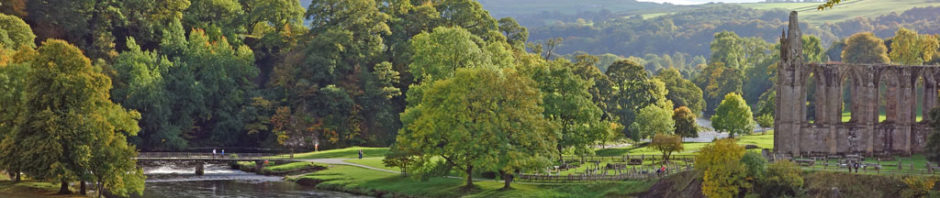
Bolton Priory stands in an idyllic spot by the small village of Bolton Abbey on a sweeping bend of the River Wharfe. The priory is often referred to as Bolton Abbey, but its proper name is Bolton Priory.

Wharfedale in snapshot

Wharfedale in snapshot

The priory was founded in 1151 by Alice de Romille as a place for Augustinian canons – also known as the ‘Black Canons’. It took over 100 years to build and is an impressive display of architecture. Although partly destroyed during Henry VIII’s disolution of the monasteries, the main walls still stand, the old windows providing intriguing windows to the sky.

The Priory

The Priory

The drama of light and dark.

Continue Reading →

Comments { 1 }